
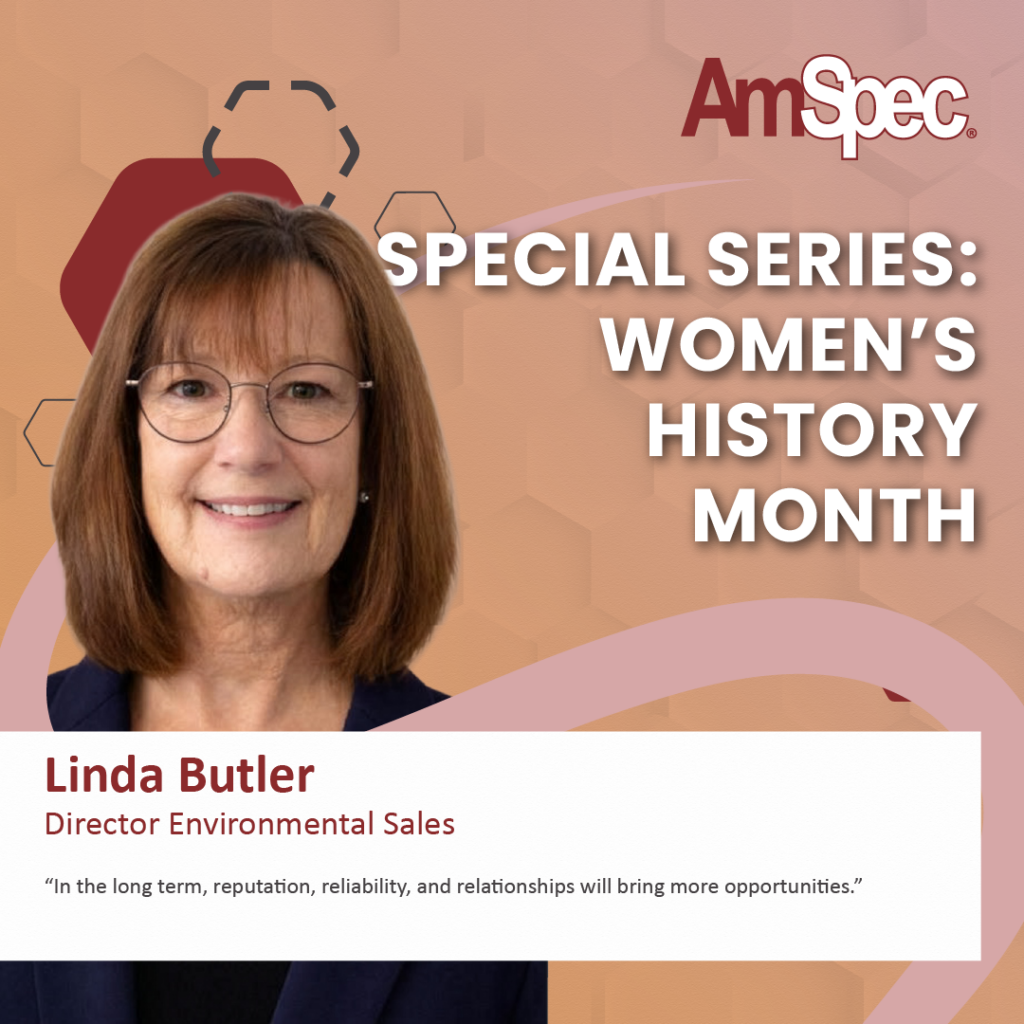
Tell us a little about yourself and how long you’ve been with AmSpec.
I have been married for 39 years and am a proud mother of two adult children, with six grandchildren. I am an avid golfer and fisherperson. I have been with A&B Labs for six years, and when AmSpec acquired the company six months ago, I became part of their team. My role allows me to work with colleagues across different areas, which has helped me grow professionally. I appreciate the opportunity to mentor and help others achieve their goals
Many people find themselves in the TIC industry by chance. What was your journey?
I started out as a marketing coordinator for a laboratory and later transitioned into a project management role.
How did you end up selling environmental testing services?
The laboratory’s owner asked where I saw myself in five years with the company. I told him I enjoyed working with the customers in my role. He then suggested that moving into outside sales would be a smart career move, and I have been doing that ever since.
The environmental TIC landscape is rapidly evolving (PFAS, microplastics, ESG). From your vantage point, what is the single biggest shift you see in buyer behavior right now?
From what I’m seeing, one of the biggest shifts in buyer behavior right now is that clients are becoming much more proactive about environmental testing. Instead of waiting until regulations require it, many are starting to look ahead—especially when it comes to emerging concerns like PFAS and fenceline monitoring. Overall, buyers want partners who can not only provide accurate testing but also help them stay ahead of evolving regulations and requirements.
Environmental sales often requires translating complex scientific data (lab results, methodologies) into business risk. How do you coach your team to sell consultatively rather than just transactionally?
Environmental testing can involve a lot of technical detail, so I encourage the team to focus first on understanding the client’s bigger picture—what regulations they’re facing, and what decisions they need to make based on the data. By asking the right questions and positioning ourselves as a resource, the conversation shifts toward solving problems and guiding clients through complex issues rather than simply selling a test.
Finding salespeople who can sell and understand environmental science is hard. What is the one quality or trait you refuse to compromise on when hiring for your team?
A salesperson who is naturally curious will want to understand the science behind what we do, not just memorize a sales script. They’ll ask questions, learn the terminology, and take the initiative to stay informed about environmental issues affecting clients. Credibility with clients like environmental consultants, regulators, and industrial professionals is critical in the environmental industry. The relationship is sometimes the determining factor in which lab the client will use.
What is one fun fact about you that would surprise your colleagues?
I won first place with Texas Trophy Hunters for a buck I shot on our deer lease.
What’s the best piece of career advice you’ve ever received, and who gave it to you?
The best advice I received was from the owner of a lab I worked for, who said, “Stay focused on learning and adding value,” that in the long term, reputation, reliability, and relationships will bring more opportunities to me and the organization I work for.
Last but not least: coffee or tea? And what’s your order?
Anyone who knows me would say coffee. I always look for unique coffee houses when I travel. I drink plain black coffee or sometimes splurge on a Caramel Macchiato Iced Coffee.