
In the testing, inspection, and certification (TIC) industry, safety has always been a central focus, but the expectations surrounding it are changing. What once consisted of meeting basic regulatory requirements has now evolved into a holistic approach that integrates personal safety, environmental protection, and responsible resource management. As fuels diversify, operational hazards become more complex, and clients demand stronger assurances, the TIC sector is redefining what it means to work safely. Modern safety practices go far beyond compliance documentation; they are shaping culture, influencing operational strategy, and elevating service quality across global energy supply chains.
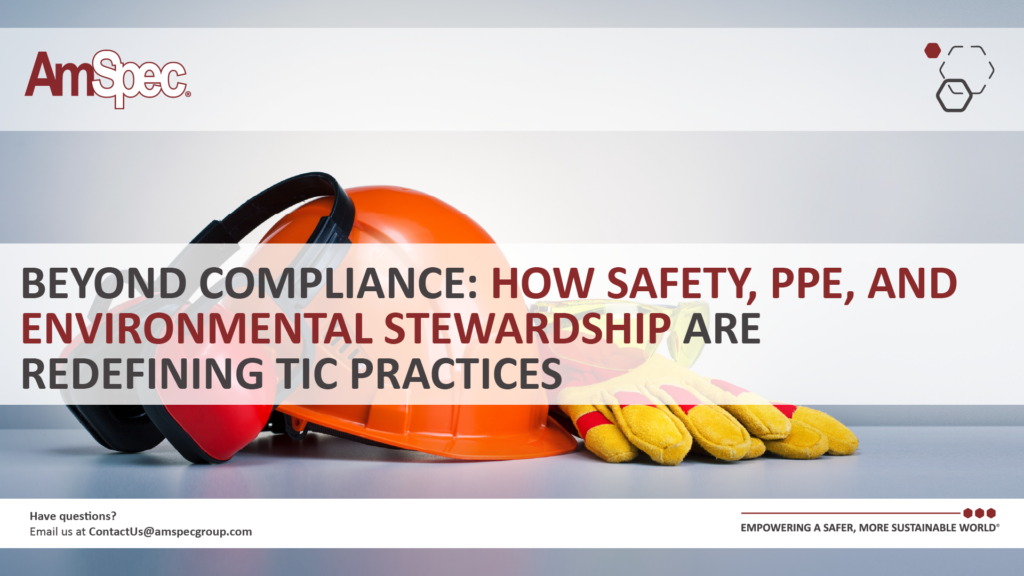
One major shift is the expanded role of personal protective equipment. PPE has traditionally included hard hats, gloves, safety glasses, and steel-toe boots. But as inspectors encounter more varied products—from crude oils and petrochemicals to HVO, SAF, ethanol blends, and pyrolysis oils—the PPE requirements have evolved. Chemical-resistant gloves, flame-resistant clothing that meets NFPA or EN standards, intrinsically safe communication devices, and advanced respiratory protection are now part of standard field kits. These upgrades reflect the diverse hazards inspectors face, including toxic vapors, corrosive materials, reactive intermediates, and confined spaces. PPE is now viewed not as a last line of defense, but as part of a broader safety ecosystem built into every phase of TIC operations.
Environmental stewardship has also become an essential component of modern field practices. Historically, sample waste, oily rags, contaminated PPE, and solvent residues were managed through basic disposal channels. Today, environmental regulations and client expectations require far more rigorous waste-handling protocols. TIC companies must segregate hazardous vs. non-hazardous waste, follow region-specific disposal rules, and document waste streams through licensed handlers. Regulations under national environmental agencies, local environmental-protection boards, and frameworks such as the EU Waste Directive have prompted tighter controls. Modern TIC providers use dedicated containment systems, labeled disposal units, spill-control kits, solvent recycling programs, and structured waste audits to minimize environmental footprint.
Sampling practices themselves are a key area where safety and environmental considerations intersect. Open sampling once exposed inspectors to vapors, residues, and fall hazards, and released fugitive emissions into the atmosphere. With the rapid adoption of closed-loop sampling systems, TIC operations now prioritize containment and vapor control. These systems align with OSHA, ATEX, and environmental-emissions standards, while reducing contamination risk and ensuring cleaner, more representative samples. Closed systems are a major example of how TIC practices are transitioning from reactive compliance to proactive environmental responsibility.
Operational behaviors have also transformed. Inspectors today receive advanced training not only in sampling methods, but also in hazard recognition, ergonomics, fall protection, confined-space awareness, emergency response, and environmental protection. Facilities increasingly require site-specific training before permitting access, and TIC providers are expected to meet or exceed these standards. This shift supports a more knowledgeable and situationally aware workforce—one that can respond quickly to abnormalities, prevent incidents, and maintain professional consistency across diverse operating environments.
Digital tools now support safety and environmental stewardship in ways that were not possible before. Electronic permits, real-time reporting, digital chain-of-custody systems, and mobile documentation platforms reduce paperwork errors and improve transparency. QR-coded sample containers, digital hazard checks, and automated communication between inspectors and coordinators help ensure that essential safety steps are never skipped. These tools also play a role in regulatory compliance, supporting ISO 17025 documentation control and providing auditable records for environmental and safety inspections.
Client expectations have played an important role in this transformation. Energy companies increasingly view safety and environmental performance as risk-management priorities rather than operational details. They expect TIC partners to demonstrate leadership in safe operations, emissions reduction, responsible waste handling, and contamination prevention. A TIC company that cannot meet these expectations risks losing client trust and market position. Conversely, those that elevate their safety and environmental practices strengthen their credibility and present themselves as modern, reliable partners capable of handling complex fuels and evolving regulatory demands.
This cultural shift is also reflected in audit processes. Clients routinely evaluate TIC providers on safety performance, environmental compliance, equipment standards, training programs, and incident history. A strong safety culture, combined with environmentally responsible operations, is becoming a differentiator in competitive markets. The TIC sector is no longer judged only on technical accuracy, but on the professionalism, responsibility, and ethical standards that support that accuracy.
AmSpec has embraced this evolution by investing in advanced PPE, closed-loop sampling systems, modern waste-handling protocols, digital reporting tools, and continuous training aligned with ASTM, API, ISO, OSHA, and environmental regulatory guidelines. With a global network of trained inspectors and ISO 17025-accredited laboratories, AmSpec combines technical rigor with a commitment to safe, environmentally responsible operations. These efforts ensure that every inspection, every sample, and every certificate reflects not only accuracy—but stewardship, reliability, and respect for the environments in which clients operate.