
Every cargo of grain, oilseed, or vegetable oil that changes hands carries a paper trail of quality and safety claims. Food safety testing services confirm those claims before a contract closes, a vessel loads, or a buyer takes delivery. For traders, that verification isn’t a formality. It’s what stands between a clean settlement and a rejected shipment, a contract dispute, or a compliance failure at the border.

This guide is written for commodity traders, procurement and trading teams, importers and exporters, and other commercial supply-chain professionals who need to understand how testing and inspection fit into a transaction, without needing deep lab or food-science expertise. It walks through what food safety testing covers, where it fits into a trade cycle, how inspection and certification differ from testing, and what to ask a provider before you sign.
What Food Safety Testing Covers for Commodity Traders
Food safety testing for agricultural products isn’t one test. It’s a set of checks that together confirm a commodity is what the contract says it is, free of contamination, and fit for its intended market. The work generally falls into three distinct activities, often grouped under the industry term testing, inspection, and certification (TIC):
- Testing: Laboratory analysis for quality, composition, and contaminants, including moisture content, pesticide residues, mycotoxins, nutritional content for labeling, and GMO status.
- Inspection: An independent assessment or verification activity across the supply chain, from crop condition and field maturity assessments to on-site verification of processing and packaging.
- Certification: A separate conformity-assessment activity, performed where applicable against a defined scheme or standard, such as government food safety requirements or organic, fair trade, or sustainability schemes.
Each piece matters for a different reason. Testing tells you what’s actually in the cargo. Inspection confirms how it was produced, stored, and handled. Certification, where applicable, provides independent confirmation that defined requirements or standards have been met. These are separate services, and a lab report on its own isn’t a certification.
Where Testing Fits Into the Trade Cycle
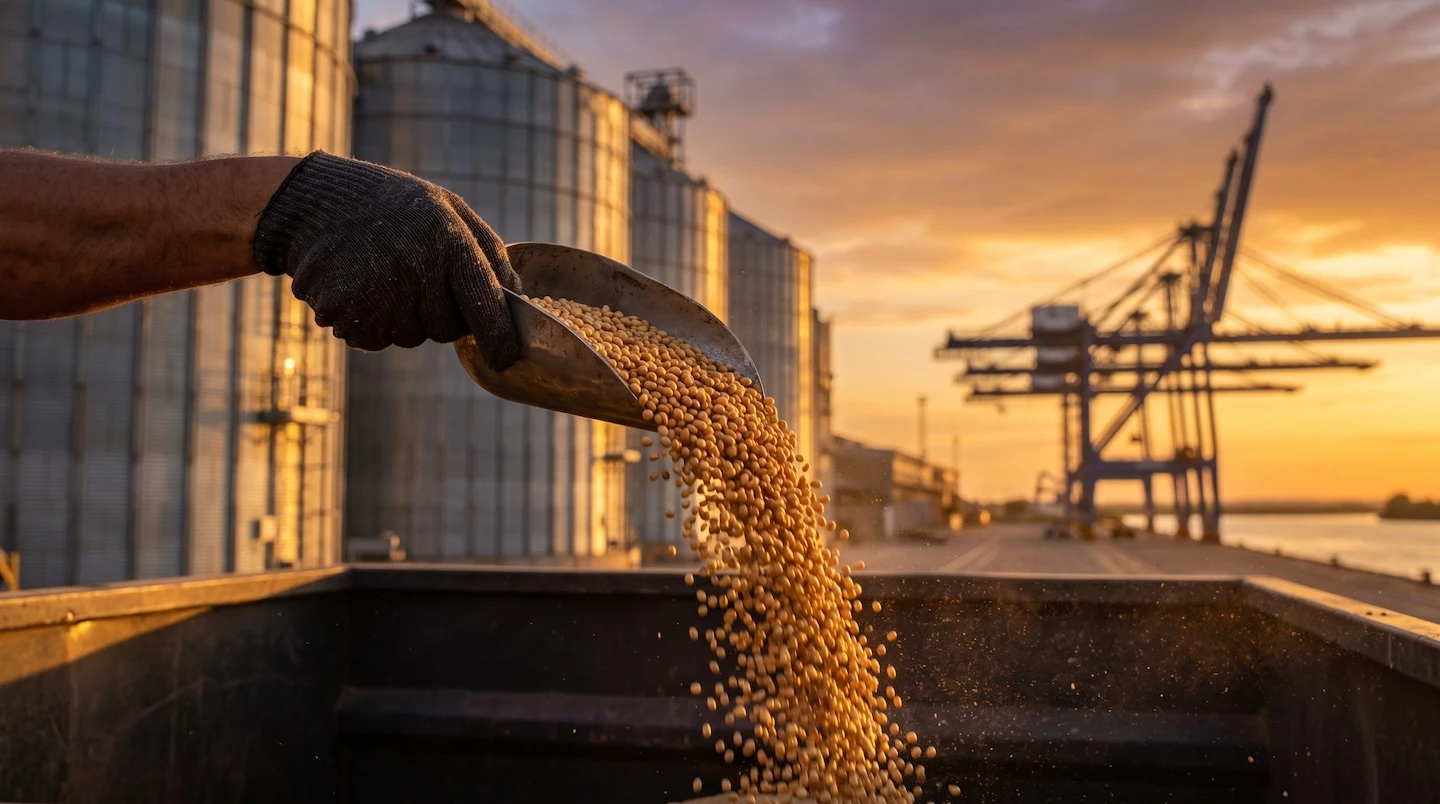
Agricultural commodity testing has touchpoints at nearly every stage of a trade, not just at the point of sale:
- Pre-shipment: Verification of the product at origin, including compliance with shipping marks and tally specifications, before it’s committed to a vessel or container.
- Loading: Sampling of export cargo as it loads into bulk vessels or shipping containers, to document the condition at the point of departure.
- Weight verification: Confirmation via shore scale, weighbridge, or independent calculation, so quantity disputes don’t surface after the fact.
- Marine surveys: Hold cleanliness checks and on-hire and off-hire surveys tied to vessel condition.
- Storage and inventory: Ongoing storage management, inventory control, and stock monitoring for cargo held between origin and destination.
A trader who only tests at one of these points is exposed at every other one. A clean pre-shipment result doesn’t tell you anything about a hold that wasn’t properly cleaned before loading, and a clean load doesn’t tell you what condition the cargo arrives in after weeks in storage.
Why Vegetable Oils Carry Added Risk
Vegetable oils and fats carry a different risk profile than dry commodities like grain or pulses. Oils oxidize, pick up contamination more readily in transit, and are frequently blended or adulterated, which makes vegetable oil testing a distinct discipline rather than a variation on grain testing.
Testing coverage for vegetable oils typically includes:
- Fatty acid composition, to confirm the oil matches its stated type and grade.
- Contaminants, including pesticide residues and heavy metals.
- Quality indicators such as rancidity and color.
Inspection extends to production facilities, storage tanks, and transportation methods, since oil quality can degrade well after the point of testing if storage or transport conditions aren’t controlled. Separate from testing and inspection, palm oil traders in particular deal with sustainability certification schemes such as RSPO, alongside organic standards and general quality assurance documentation.
Inspection, Certification, and Market Access
Test results confirm what’s in a cargo, but market access usually depends on more than a lab report. Destination regulators, buyers, banks, and customs authorities often look for independent inspection records and, in some cases, certification against a specific scheme or standard. The two serve different purposes.
Inspection provides an independent assessment of the cargo and how it has been handled, from its condition and quantity at loading through storage and transport. Those inspection records support:
- Trade facilitation. Providing the documentation buyers, banks, and customs authorities require to release payment or clear goods.
- Fraud prevention. Establishing a documented chain of custody that makes ingredient substitution, dilution, or origin misrepresentation harder to conceal, a risk that has grown as agricultural supply chains move through more intermediaries, storage points, and jurisdictions before reaching a buyer.
- Brand and counterparty trust. Giving buyers a third-party record they can rely on instead of taking a seller’s word for quality.
Certification is a separate conformity-assessment activity, performed where applicable against a defined scheme or standard. When a destination country’s import rules, a buyer’s specifications, or a contract call for it, certification provides independent confirmation that those requirements have been met. Whether it’s needed depends on the commodity, the contract, and the market the cargo is headed to.
For grain, oilseed, and feedstuff testing specifically, this usually means testing for moisture content, protein levels, pesticide residues, and mycotoxins, paired with inspection of storage conditions and transportation methods, and, where the contract or destination market calls for it, certification against non-GMO, organic, or other specified quality standards.
What to Ask a Testing Provider Before You Sign a Contract
Not every testing provider covers the same ground, and the gaps tend to surface at the worst possible time, mid-dispute rather than during due diligence. Before locking in a provider, it’s worth confirming:
- Which commodities and testing types they actually cover, since a provider strong in grain may not have the same depth in vegetable oils or specialty crops.
- Whether they can test at every stage you need, from origin through storage and delivery, or only at one point in the chain.
- Whether the laboratories handling your samples are accredited for the specific tests you need, since accreditation scope can differ from lab to lab and region to region.
- What inspection capabilities they have at the ports, terminals, and storage locations your cargo will move through.
- Which reports or certificates they issue as part of testing and inspection, such as certificates of analysis or inspection reports, and whether your buyers and destination markets accept them.
- Whether certification services are relevant to the deal at all, and if so, which schemes or standards the provider can certify against and where that certification is recognized.
- How quickly results and reports get delivered, since a slow turnaround can hold up a shipment as much as a failed test.
Getting clear answers on these before a contract is signed is far cheaper than finding the gaps after a cargo is already in transit.
FAQ: Food Safety Testing for Commodity Traders
What’s the difference between testing, inspection, and certification?
Testing is laboratory analysis of the product itself. Inspection is an independent assessment or verification of how it was produced, handled, or stored. Certification is its own conformity-assessment process, performed where applicable against a defined scheme or standard, that independently confirms those requirements have been met. Testing and inspection don’t automatically include certification.
Do all agricultural commodities require the same testing?
No. Grain and oilseeds are typically tested for moisture, protein, pesticide residues, and mycotoxins. Vegetable oils are tested differently, with a focus on fatty acid composition, contamination, and quality indicators like rancidity, since oils carry different degradation and adulteration risks than dry commodities.
Why does testing matter at multiple points in the trade cycle, not just once?
A cargo’s condition can change between origin and destination. Testing only at loading, for example, won’t catch a problem introduced during storage or transport.
Testing Coverage That Follows the Trade
Food safety testing works best when it’s built into how a trade moves, not treated as a single checkpoint. Traders who verify quality at origin, at loading, and again through storage and delivery are working with fewer surprises and fewer disputes to untangle after the fact.
AmSpec’s Agriculture & Food team provides testing and inspection across grain, oilseeds, pulses, sugar, and vegetable oils, with labs that follow ISO/IEC 17025:2017 requirements. Whatever commodity you’re trading, AmSpec can help match your testing coverage to how that specific product actually degrades, gets contaminated, or gets misrepresented, so the results and documentation behind it hold up when it matters.