
Since opening its doors in November 2025, AmSpec’s Agri-Food Laboratory in Curitiba, Brazil, has continued to strengthen its analytical capabilities, supporting clients across the agri-food supply chain with reliable testing solutions that help secure product safety, quality, and compliance.
Food safety relies on a combination of expertise, advanced technologies, and rigorous analytical procedures. Every day, our laboratory specialists perform a wide range of analyses designed to provide clients with confidence in their products and processes.
The following images offer a glimpse into some of the testing activities performed at our Curitiba Lab and highlight the science that supports food safety throughout the agri-food industry.
Screening and Phenotypic Confirmation (Microscopy)
Microscopy remains an essential tool in microbiological analysis.
Using optical microscopes, our analysts perform screening and phenotypic confirmation of isolated microorganisms through detailed morphological evaluation. This process enables visual confirmation of microbial identity and purity before samples proceed to more advanced testing.
By ensuring the reliability of microbial characterization, microscopy plays a critical role in biological quality control programs and helps strengthen confidence in laboratory results.
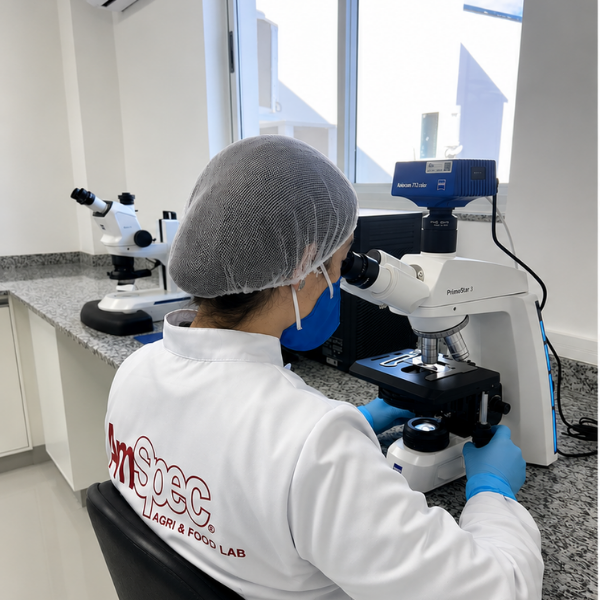
The photo shows: Slide analysis using an optical microscope.
Role and impact on Food Safety: This step enables the morphological monitoring and visual confirmation of isolated microorganisms. It is essential for ensuring the purity and identity of the strains before they proceed to advanced testing, providing complete reliability in the biological quality control of food products.
Isolation and Manual Preparation of Genetic Material
Precision and contamination control are fundamental in molecular testing.
Within a controlled laminar flow hood environment, laboratory specialists carefully handle samples and perform DNA isolation procedures using high-precision micropipettes. These controlled conditions significantly reduce the risk of cross-contamination while preserving sample integrity throughout the preparation process.
This rigorous approach helps ensure that the genetic material entering the analytical workflow accurately reflects the original sample.
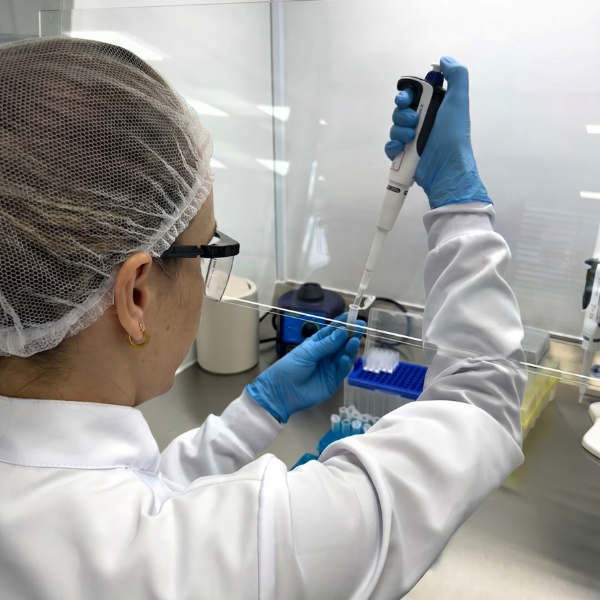
The photo shows: Rigorous sample handling and pipetting inside a laminar flow hood.
Role and impact on Food Safety: The controlled environment of the laminar flow hood, combined with high-precision micropipettes, prevents any possibility of cross-contamination during the initial DNA isolation steps. This technical rigor ensures the utmost integrity of the samples prior to analysis.
Automated DNA Extraction and Preparation
Automation is transforming modern food safety testing.
At the Curitiba Lab, advanced automated systems are used to extract and prepare genetic material with a high degree of standardization and repeatability. By reducing variability and improving precision, automated extraction enhances the quality and consistency of molecular analyses.
The resulting purified DNA is then prepared for subsequent quantification and molecular investigations, including advanced techniques such as digital PCR (dPCR), enabling highly sensitive and accurate microorganism detection.

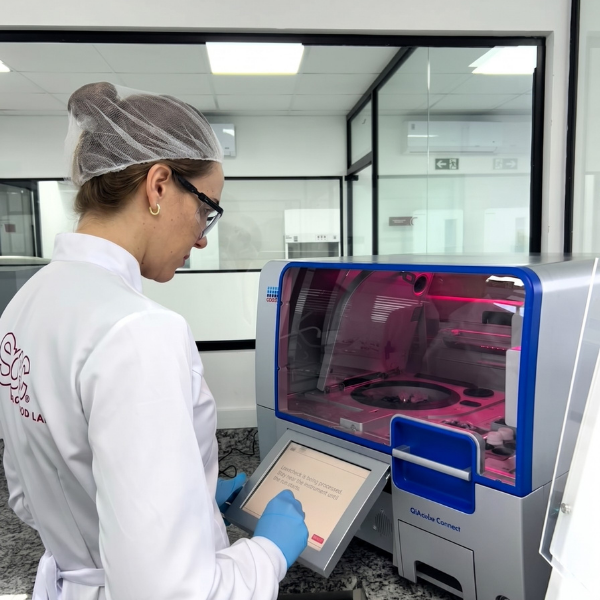
Role and impact on Food Safety: This stage focuses on the automated extraction and precise preparation of genetic material, guaranteeing high standardization, repeatability, and safe liquid handling. This process yields fully isolated DNA, ready for the subsequent workflow step: quantification and molecular analysis via digital PCR (dPCR).
Microbiological Culture Analysis and Colony Evaluation
Culture-based microbiological testing continues to serve as a cornerstone of food safety assessment.
By examining microbial growth and colony morphology on culture media, analysts can confirm, enumerate, and isolate microorganisms present within a sample. This analysis provides valuable information for the detection of foodborne pathogens and indicator organisms that may impact product safety and quality.
These evaluations help verify compliance with microbiological safety requirements while supporting quality assurance programs throughout the agri-food supply chain.
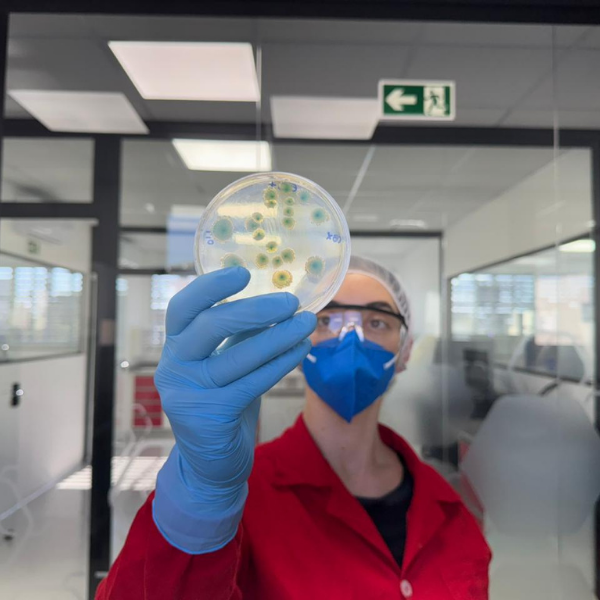
The photo shows: An analyst carefully examining a Petri dish to evaluate microbial growth and colony morphology on a culture medium.
Role and impact on Food Safety: This step is crucial for the visual confirmation, enumeration, and isolation of microorganisms present in a sample. By analyzing these cultures, the laboratory can detect specific foodborne pathogens or indicator organisms. This highly reliable method ensures that food products comply with strict microbiological safety criteria, directly protecting consumer health and supporting the quality assurance of the agri-food supply chain.
Moisture Analysis
Moisture content is a critical quality parameter for many agricultural commodities.
Using specialized moisture analyzers, our laboratory team evaluates moisture levels that can directly influence product stability, storage conditions, shelf life, and overall quality. Excessive moisture can encourage the growth of bacteria and fungi, contribute to toxin production, and negatively affect product integrity.
Accurate moisture determination is therefore an essential component of grain quality management and food safety monitoring.
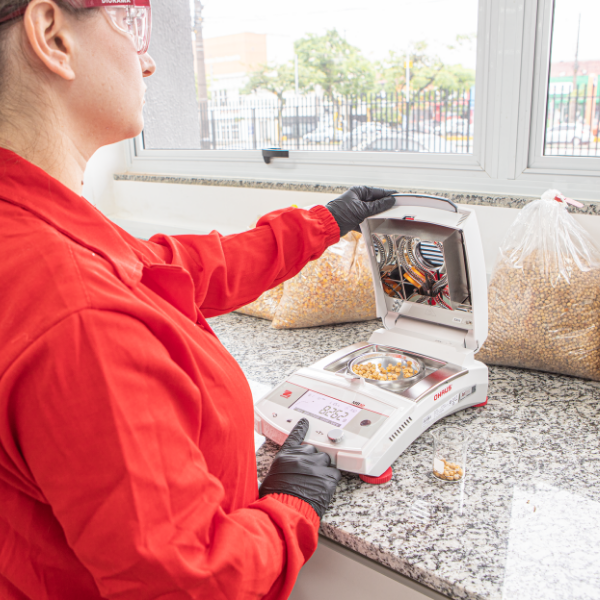
What the photo shows: An analyst operating a moisture analyzer.
Role and impact on Food Safety: Moisture control is fundamental to food safety. Improper moisture levels can accelerate the proliferation of bacteria and fungi, lead to the production of harmful toxins, degrade nutrients, and compromise product texture. This analysis is a critical step in ensuring grain quality and stability throughout the agri-food supply chain.
Chromatographic Analysis
Among the most advanced analytical capabilities at the Curitiba Lab are gas chromatography (GC) and liquid chromatography (LC) systems coupled with mass spectrometry.
These powerful technologies enable the detection and quantification of contaminants at trace levels within complex food and agricultural matrices, including grains, vegetable oils, flour, and soybean meal.
Chromatographic analyses play a critical role in monitoring substances such as pesticides, herbicides, polychlorinated biphenyls (PCBs), polycyclic aromatic hydrocarbons (PAHs), and mycotoxins. By identifying these compounds with exceptional sensitivity and accuracy, the laboratory helps clients meet regulatory requirements, manage risk, and protect consumer health.
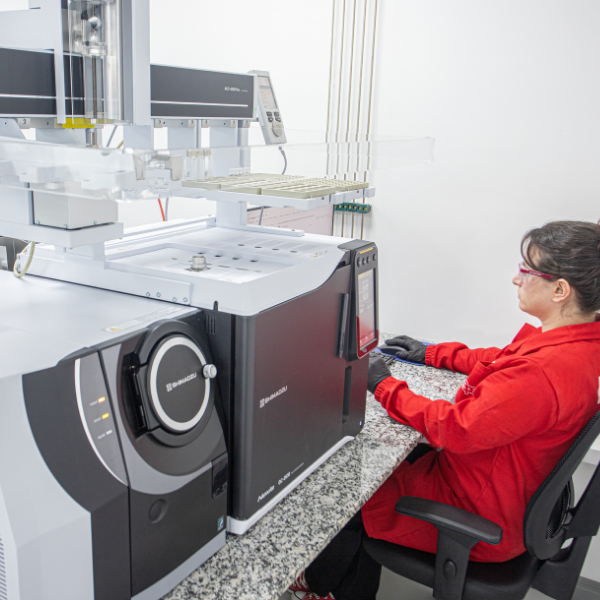
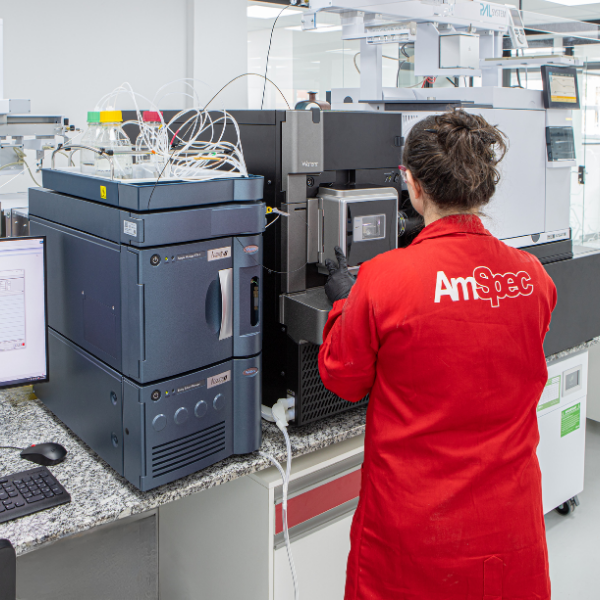
Role and impact on Food Safety: Chromatographic analysis plays a critical role in food safety by enabling the detection of pesticides, herbicides, PCBs, PAHs, and mycotoxins at trace levels within complex matrices such as grains, vegetable oils, flour, and soybean meal.
Supporting Food Safety Through Science
As food supply chains become increasingly global and regulatory expectations continue to evolve, access to reliable analytical data has never been more important.
At AmSpec Curitiba Lab, our team combines scientific expertise with advanced technologies to help clients navigate these challenges and maintain confidence in the products they bring to market.
By investing in analytical excellence and continuous innovation, we are strengthening our ability to support the agri-food industry today and for the future.
Contact Our Team
To learn more about the analytical capabilities of the AmSpec Curitiba Lab or discuss your testing requirements, please contact our team: AgriLab.Curitiba@amspecgroup.com.
Our specialists are available to support your food safety, quality, and compliance needs across a wide range of agri-food commodities and products.