
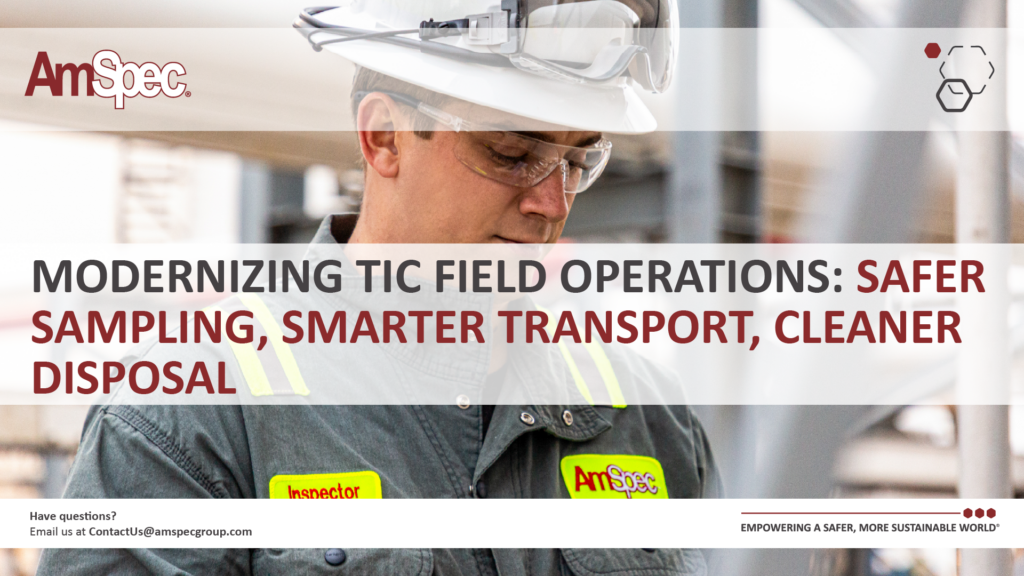
Field operations have always been the backbone of the testing, inspection, and certification industry. Inspectors climb tanks, monitor transfers, secure samples, witness custody-transfer measurements, and maintain the chain of custody that underpins commercial confidence in global energy markets. But as fuels evolve, regulations tighten, and safety expectations rise, the traditional ways of working are being transformed. Modernizing TIC field operations is no longer optional; it is essential to safeguard workers, reduce environmental impact, and ensure the integrity of laboratory data. Safer sampling methods, smarter transport logistics, and cleaner waste-handling practices represent the new standard for a responsible and future-ready TIC sector.
One of the most significant developments in field modernization is the shift from open sampling to closed systems. Historically, inspectors accessed the product directly through tank hatches or sampling wells, exposing themselves to vapors, injury, and confined-space risks. Today, engineered closed-loop sampling systems dramatically reduce exposure. With sealed connections, vapor-return paths, and controlled product flow, closed systems support compliance with OSHA requirements, ATEX directives, and environmental-emissions rules in Europe and the United States. These systems also reduce the risk of oxygen intrusion and contamination, improving sample integrity—particularly important for sensitive materials such as FAME biodiesel, renewable diesel, synthetic blending components, and circular-economy feedstocks like pyrolysis oils.
Field operations have also become more data-driven. Digital sample tracking, QR-coded containers, electronic chain-of-custody forms, and real-time communication platforms now support faster turnaround and improved transparency. Coordinators and inspectors can communicate loading changes, sample status, or abnormalities with far greater accuracy than paper-based methods. Digital workflows reduce transcription errors, improve traceability, and support compliance with ISO 17025 requirements for documentation control. Modern digital tools also integrate more easily with laboratory information systems, enabling clients to receive faster and more reliable updates during high-pressure vessel or pipeline operations.
Transportation of samples has also evolved. Historically, inspectors carried glass bottles manually, often without temperature control or specialized packing. While this method worked for conventional petroleum products, today’s fuels—especially biofuels, waste-derived intermediates, and oxygenated materials—require more controlled conditions. Modern TIC providers use insulated carriers, UN-approved packaging, secondary containment, and spill-resistant designs to meet hazardous-material transport regulations. These practices support compliance with IATA, DOT, and ADR requirements depending on the region. Temperature control is also important; certain samples must be kept at stable temperatures to prevent degradation or phase separation before laboratory analysis. Smarter transport is not just safer—it protects the accuracy of laboratory results.
Cleaner and more environmentally responsible disposal is another cornerstone of modernized field operations. Historically, sample waste, oily rags, contaminated PPE, and remaining materials were managed with limited standardization across sites. Today, environmental regulations have tightened, requiring stricter waste classification, segregation, and disposal controls. International guidelines, regional environmental laws, and facility-specific waste-handling procedures all drive the need for consistent TIC practices. Modern TIC providers invest in labeled disposal streams, solvent-recycling programs, dedicated waste-storage areas, and partnerships with licensed disposal contractors. Cleaner disposal practices reduce environmental impact and strengthen client confidence in responsible operations.
Inspector training is also undergoing a transformation. Traditional training models focused heavily on measurement techniques and sampling procedures. While these remain foundational, modern training expands into digital reporting systems, emission-control practices, hazard communication, ergonomics, and environmental stewardship. Inspectors must understand how new fuels behave, how vapor-control systems function, how to detect sampling limitations, and how environmental rules apply during field work. Training aligned with ASTM, ISO, and API standards ensures consistency and supports inspector competency across global networks. This professionalization not only improves safety but also elevates service quality across the industry.
Equipment modernization plays an equally important role. Portable gas detectors, intrinsically safe communication devices, fall-protection systems, mobile lighting, ergonomic sampling equipment, spill-control kits, and improved PPE all contribute to safer field operations. Modern TIC companies assess equipment regularly, maintain calibration records, and ensure that inspectors have the right tools for increasingly complex products and facilities. As fuels evolve—especially with the rise of renewable diesel, SAF, ethanol blends, and circular-economy feedstocks—the equipment needed to sample them safely must evolve as well.
Ultimately, modernization is driven by the changing expectations of clients, regulators, and the market. Refineries, terminals, and trading houses increasingly prefer TIC partners who prioritize safety, reduce environmental impact, provide transparent digital documentation, and demonstrate strong operational discipline. Modernized field operations help clients mitigate risk, prevent incidents, and maintain confidence in the sampling and inspection data that drive multimillion-dollar commercial decisions.
AmSpec has invested heavily in modernizing its field operations through closed-loop sampling, advanced digital reporting tools, enhanced inspector training, safer transport methods, and environmentally responsible waste practices. Combined with ISO 17025-accredited laboratories and a global network of skilled inspectors, these modernization efforts allow AmSpec to provide safer, cleaner, and more reliable field services while supporting clients across the rapidly evolving energy and chemical landscape.