
Tell us a bit about yourself and how long you have been with AmSpec.
I’ve been with AmSpec since 2012, and it’s been an incredible journey. I started in an administrative role and grew alongside the company during a period of rapid global expansion. Over the years, I’ve had the opportunity to build teams, refine processes, and help strengthen our commercial foundation across the Western Hemisphere.
What originally drew you to the world of contracts and compliance, and how did you find your way into the specialized field of Testing, Inspection, and Certification?
While working at AmSpec, I earned my master’s degree in environmental law, and I was drawn to contracts because they sit at the intersection of strategy and execution in our business. They aren’t just legal documents — they define expectations, manage risk, and set the tone for partnerships. The Testing, Inspection, and Certification industry adds another layer of purpose. Our work supports safety, environmental responsibility, and global trade.
How is managing contracts in the TIC industry different from other sectors like retail or tech?
TIC is uniquely complex. Our agreements must reflect regulatory standards, technical scopes, and global operations — often all at once.
It’s not transactional. It requires deep collaboration with operations, finance, and leadership to ensure what’s written on paper aligns with what happens in the field. Precision matters — but so does practicality.
Many people see contracts as just paperwork. What value does a well-managed contract lifecycle bring to our clients and to our own operations?
A strong contract lifecycle creates alignment from day one. For clients, it brings clarity and confidence — scope, pricing, and expectations are defined upfront. For our teams, it improves speed, reduces disputes, and strengthens revenue quality. When contracts are structured well, everything downstream — service delivery, invoicing, collections — becomes smoother. Well-managed contracts aren’t paperwork. They’re infrastructure.
What qualities do you look for when hiring someone for your team? Is it attention to detail, commercial acumen, or something else entirely?
Detail orientation is essential — but I look for people who ask “why,” not just “what.” Strong contract professionals understand business impact. They anticipate risk, communicate clearly, and think beyond the document in front of them. And above all, I value collaboration. Our best work happens when we operate as partners to the business.
How is technology changing the way you and your team work?
Technology is helping us move from reactive to strategic. Automation and integrated systems allow us to standardize data, reduce manual touchpoints, and gain better visibility across the contract lifecycle. That shift frees the team to focus on analysis, process improvement, and supporting smarter commercial decisions.
You oversee some of our most complex legal and commercial documents. What do you enjoy doing to “unplug” when you step away from the contracts?
Life outside of work is full and very active. I’m deeply involved in my kids’ activities — especially youth sports and school events — so a lot of my time is spent cheering from the sidelines or helping behind the scenes. I genuinely love being part of that energy and community. When I have quieter moments, I gravitate toward things that are creative— cooking a new recipe, crocheting (which is surprisingly therapeutic), or getting lost in a good book. Those slower, hands-on activities are a great counterbalance to our 24/7 hectic industry!
What is one fun fact about you that would surprise your colleagues?
I raise chickens — and I’m quietly campaigning to add goats next.
What’s the best piece of career advice you’ve ever received, and who gave it to you?
“The power plant does not have energy. It generates energy.” – High Performance Habits by Brendan Burchard.
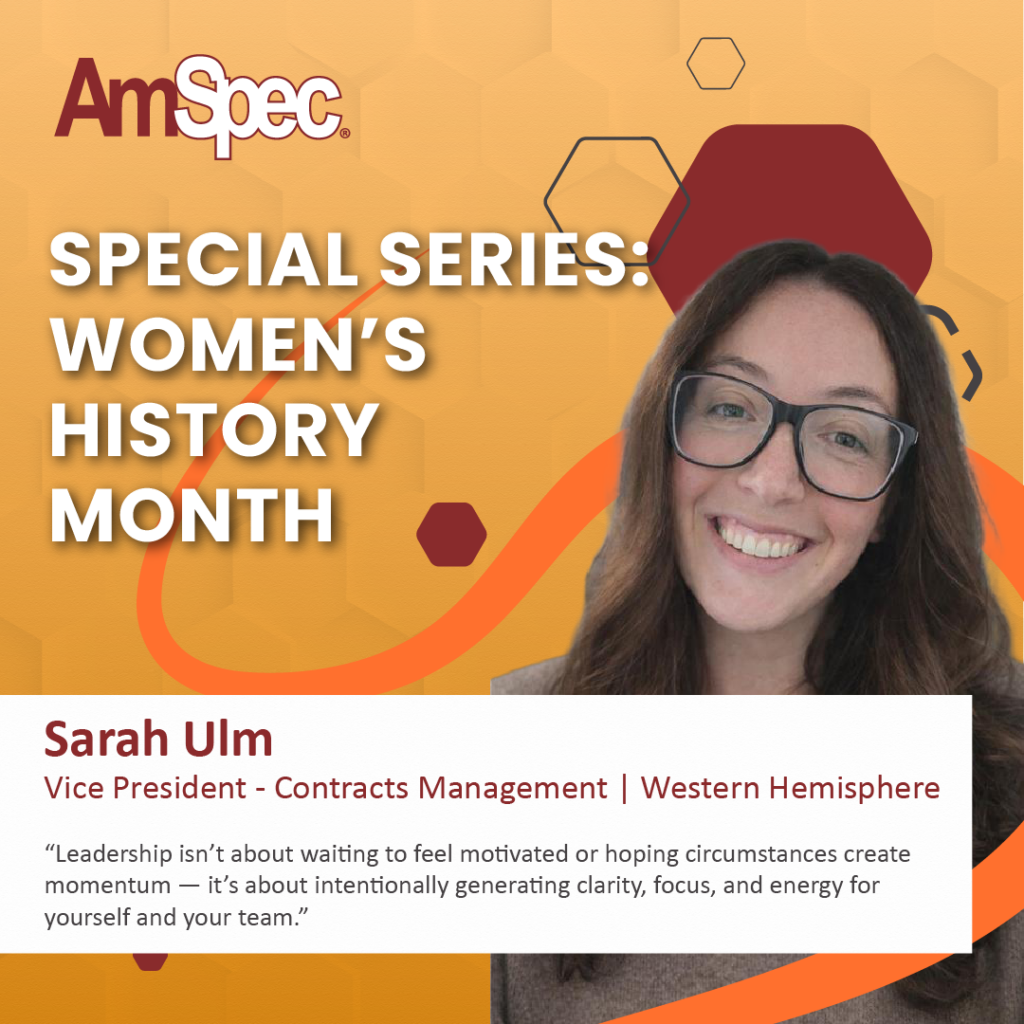
That idea shifted my perspective. Leadership isn’t about waiting to feel motivated or hoping circumstances create momentum — it’s about intentionally generating clarity, focus, and energy for yourself and your team.
As my role has grown, I’ve learned that mindset matters just as much as skill. The more responsibility you carry, the more intentional you have to be about how you show up each day. That’s something I work on consistently.
Last but not least: Coffee or tea? And what’s your order?
Coffee — black, always!